Текстът се публикува със съдействието на Стефка Манчева и е достъпен само на английски за момента. Надяваме се скоро да можем да представим и превод на текста.
Shinings: Challenging military romanticism, toughness, and heroism
Stefka Mancheva1
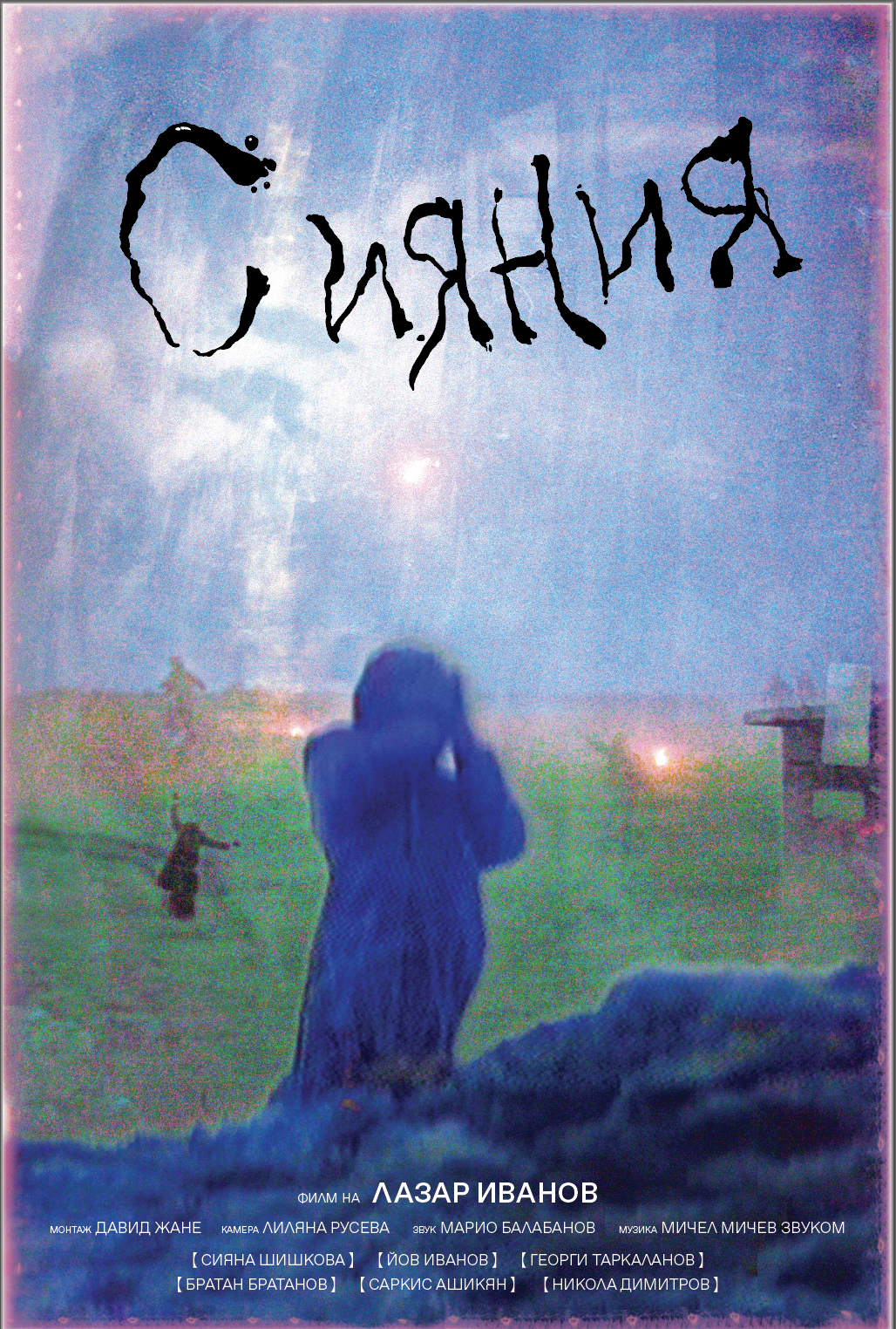
Shinings was screened in the short-film program at the 28th Sofia International Film Festival 2024. It stood out not only as a thematically relevant but also as a formally interesting film.
Тhe film opens with the blue screen of the VHS camera and the sound of the solder whistling. This comforting sound is then distorted by white noise and the sound design in the minor key. Portrets of soldiers playing with and for the camera. The combination of mini-DV, VHS, and professional camera footage creates a chaotic and tense atmosphere. When this is achieved, one of the soldiers begins to look for a lighter. By doing so in this short scene, the film builds a dramatic atmosphere just to reject it soon after. A pattern that continues throughout the film.
The opening scene is staged and edited as fiction; the acting has its theatrical note, and the sound design is doing its job to get us in the “right” mood. None of this is hidden; it is slightly exaggerated in a charmingly raw and youthful manner. As this is pleasant to watch, the following scene sets the movie and viewer on an intriguing path of challenging Military Stereotypes
The mini-DV camera from which we have seen part of the footage is in the hands of one of the soldiers. There is also an interesting layer of gender dynamics in this scene. The setting is an abandoned building in a desolate, foggy field with only one stray dog strolling around. Syana is the only female in this group of five soldiers. This creates a certain uneasiness about having Syana alone with the soldiers and touches on preconceived fears surrounding soldiers’ behavior during wartime.
One wears cool sunglasses and the other has punk-bleached hair. Their looks echo Beatniks’s rebellious individuality and non-conformity. Their distinctive fashion style is a deliberate rejection of the soldier’s appropriate look. The production does not attempt to deceive viewers that this is a serious war drama. It also avoids satirizing the genre. Instead, the participants are honestly trying to put themselves in situations related to the war and the lives of the soldiers. The atmosphere in this scene is light and casual, with immediacy and ease. In contrast to the opening scene, nothing here feels staged the spontaneous reactions and bursting into laughter, and the way they sometimes cannot hear each other shows the genuineness of the situation. Viewers begin to sense that this is not a straightforward fictional narrative.
Although the film is held in a fictional storyline, the narration is dictated by the improvisation of the participants. They challenge traditional notions of military romanticism, toughness, and heroism. In one scene, soldiers are framed in a way that resembles a socialist realism monument. The low-angle shots and how they are composed in the frame, placed on a pedestal with airplanes flying above their heads, suggest heroism. However, this heroic portrayal is short lived. The presentation seemed uncomfortable for the participants, who began to get out of character. While playing with some military tropes and exploring the military world as flâneurs (Jerzy Kociatkiewicz, 2019), they do not conform to the soldiers’ roles. The realization left for the viewer is that, in circumstances of war, this young man is unlikely to survive long on the front.
In his dissertation “The Cinema of In-Betweenness: hybrid film, its creative potential, and the problem of its definition” Filipe Caeiro poses an interesting question: ‘Is a film a hybrid when it is made so, or when the audience perceives it as so?’ Caeiro himself doesn’t have an answer, neither do I, but this question proves particularly relevant to the viewing experience of Lazar Ivanov’s Shinings.
Production Process
In a conversation about his creative decisions and processes, Lazar Ivanov says that, from as early as the project level, he planned for the film to be a collective and open process. To bring together the role of friendship and shared experience in forming a collective artistic vision, he gathered his friends from various creative disciplines for ten days in his family bungalow in a remote coastal village. He chose the place in which they all had memories from previous years and thus aimed to transfer the sense of nostalgia to the screen. Lazar suggests that the participants wear uniforms all the time instead of their casual clothes, which contributes not only to getting into character, but also to using footage from when they are not acting and struggling to get into a character.
The initial idea of Lazar is to work with local non-actors from the nearby town of Dobrich, but in the process of casting, although he found interesting non-actors, he decided to make the film with the people within the film crew. Each crew member took on a dual role: one soldier was the team chef, and the other was costumes, sound, and scenography. This decision is the major reason for the film’s ambiguous nature of its “in-between” qualities. In this communal atmosphere, they managed to produce multiple storylines by trying different concepts and approaches. They briefly explored Tarkovski’s concept of self-sacrifice but ultimately abandoned it, feeling that the film felt more deliberate and inconsistent with their vision. On the fifth day of this exploratory process, things began to fall into place, shaping what we now see in Shinings. Lazar’s directing approach is to create a space for life contingencies, and then decide what to incorporate or exclude from the final product.
The communal spirit of Lazar ‘s film’s anti-militarism, and some of its improvisational approach resemble some of the characteristics of Beat Cinema as unconventional angles and framing; abstract and surreal visuals; documentary style; voiceovers and monologues with rhythmic and lyrical quality and sound collage techniques. In Shinings the poetry is most present in Syana’s voiceover narration of a story about a barking man. At this moment, the film transitions from a rough look and chaotic mixture of home-type and professional cameras to visual and aural poetry. The voice-over has no expositional purpose. However, this effectively resembles the restlessness of the mind, circling seemingly unrelated events. Foggy fields, sunset colors, and soldiers’ figures dissolving in the darkening sky create a oneiric atmosphere. Toward the film’s end, the imagery becomes more abstract and surreal. Through deliberate distortions and imperfections (shaky movements of the camera and the primitive effects of the built-in mini DV camera, a sense of disorientation or unease is achieved. This lo-fi aesthetics also contributes to the feeling of nostalgia that the director aimed for.
In subtle and overt ways, the film plays an important role in serving as a document that preserves the current psychological landscape of youth, as a lasting testament to the human condition during menace allows viewers to connect with and understand the profound effects of geopolitical tensions. The film is a potent time capsule of the anxiety and unease generated by the war’s proximity.
-
Стефка Манчева e докторант в Институт за изследване на изкуствата на Българска академия на науките (БАН). Този текст е преработена и съкратена версия на текст, публикуван в списание Проблеми на изкуството (Art Studies Quarterly) от 2024, бр. 4. Пълната версия може да бъде прочетeна тук (на английски, платен достъп). ↩︎